National Astronomical Observatory
Scientific infrastructure over 200 years old

Other publications
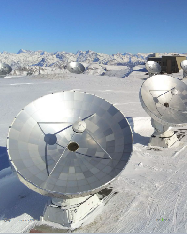
NOEMA
On a spectacular plateau in the heart of the alpine massif, at an altitude of 2550m, 12 of the most precise parabolic antennas on the planet are located. This is NOEMA, the most powerful set of radio telescopes in the northern hemisphere working in millimeter waves. This large scientific facility is the fruit of 40 years of cooperation between CNRS (France), Max-Planck-Gesellschaft (MPG, Germany) and IGN (Mitma, Spain). Built and operated by the Institute of Millimeter Radio Astronomy (IRAM), this array of radio telescopes, working in coordination with the large 30-m radio telescope at the IRAM-IGN station at Pico Veleta (near Granada), has already been the source of important discoveries, and is now poised to make observations that will continue to revolutionize the study of the universe, in particular studies of the formation of planets such as the Earth. See.

Black holes
Black holes are on the crest of the wave, and it is largely thanks to them that astrophysics remains at the centre of the scientific news. Three years ago, while the 2017 Nobel Prize was rewarding the detection of gravitational waves that betray the collisions of stellar-mass black holes, the Event Horizon Telescope (EHT) was making the groundbreaking observations that would lead to the first image of the proximity of a supermassive black hole, a result that has already received numerous international awards. And we had not finished celebrating these achievements when the Nobel Prize in Physics 2020 was awarded to three scholars of these objects that we are all so passionate about. The National Geographic Institute has been at the forefront of several of these events. See.
The National Astronomical Observatory
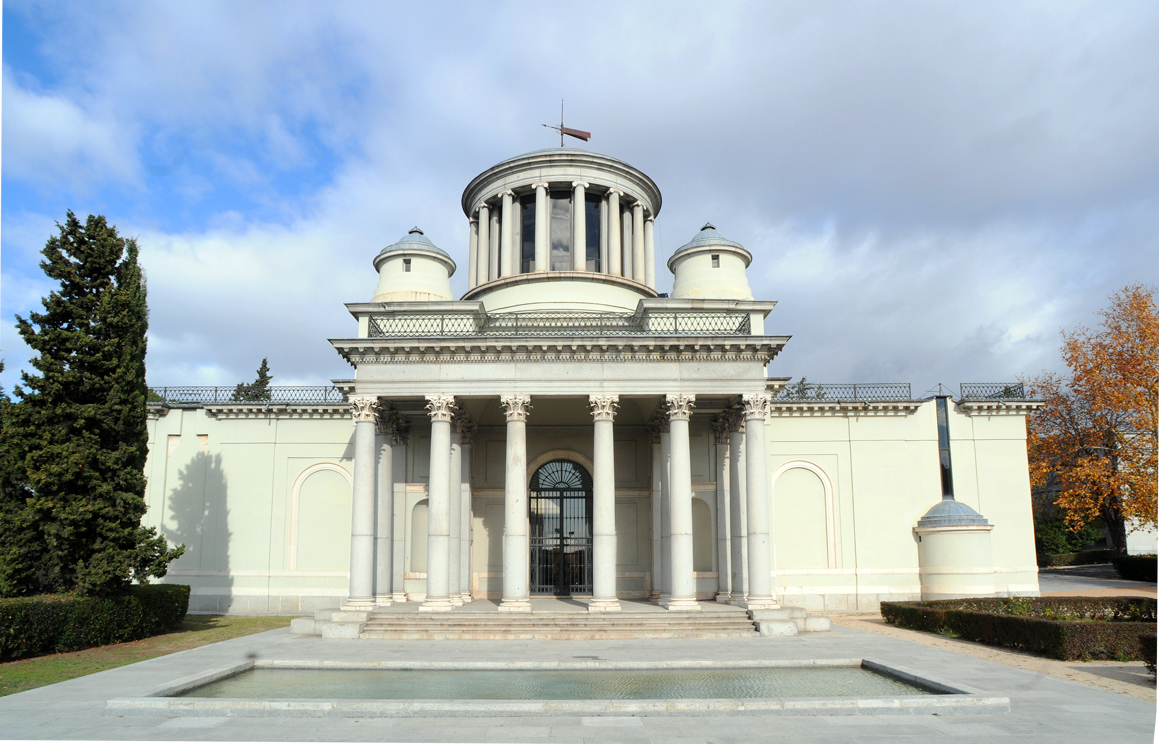
The many visitors to the Real Observatorio de Madrid are usually impressed by its amazing historical and artistic heritage. But few are aware that, in this marvellous site of the National Astronomical Observatory, as well as in other infrastructures of the Observatory, world-class astrophysics research is carried out. With studies ranging from the formation of stars and planets to the properties of black holes, the Observatory today combines a fascinating historical-artistic tradition with pioneering astrophysics. See.